Body parts and abilities
Our body parts work together when we move. We can use can and can’t to talk about abilities.
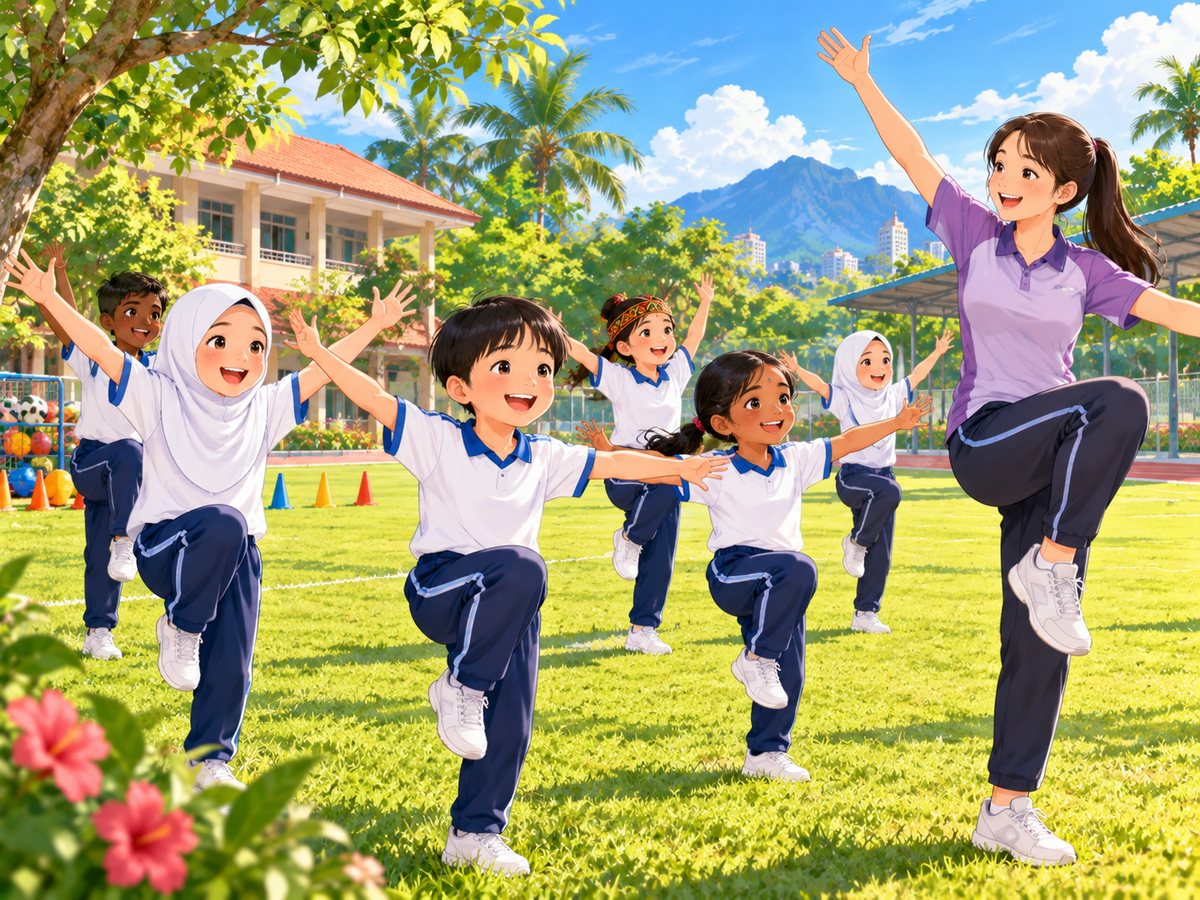
Name the body parts
Learn head, arm, fingers, hand, knee, leg, toes and foot. Notice that one foot becomes two feet, while one toe becomes several toes.
Example: I bend my knee and move my foot.
这些词分别指出身体的不同部分。先从较大的部位找起,再分辨 hand、fingers、foot 和 toes。例子:手掌和手指一起帮助我们拿东西。注意:foot 的复数是 feet,不是 foots。
Perkataan ini menamakan bahagian badan yang berlainan. Cari bahagian besar dahulu, kemudian bezakan hand, fingers, foot dan toes. Contoh: Tangan dan jari membantu kita memegang benda. Awas: Bentuk jamak foot ialah feet, bukannya foots.
Use singular and plural body words
Use one with singular words such as arm, hand, leg and foot. Use two or more with arms, hands, legs and feet. Fingers and toes are usually counted in groups.
Example: The robot has two arms, ten fingers and two feet.
先看数量,再选择单数或复数形式。数字 one 后用 foot,数字 two 后要改成 feet。例子:The child has two feet and ten toes. 注意:feet 是不规则复数,不能加 s。
Lihat bilangannya sebelum memilih bentuk tunggal atau jamak. Selepas one gunakan foot, tetapi selepas two gunakan feet. Contoh: The child has two feet and ten toes. Awas: Feet ialah bentuk jamak tidak sekata dan tidak ditambah s.
Which sentence describes two feet correctly?
题目要找数量和语法都正确的句子。先看 two 后面的名词,再检查主语 the robot 是否搭配 has。例子:The doll has two hands. 注意:不要只看 feet 正确就忽略动词。
Soalan meminta ayat yang betul dari segi bilangan dan tatabahasa. Semak kata nama selepas two, kemudian padankan the robot dengan has. Contoh: The doll has two hands. Awas: Jangan semak feet sahaja sehingga terlepas kata kerja.
Say can or can’t
Use can before a base verb for an ability. Add not to form can’t when the action is not possible. The verb does not change after can or can’t.
Example: I can skip. He can’t touch his toes.
can 表示有能力完成动作,can’t 表示没有这种能力。两者后面都直接接动词原形。例子:She can jump, but she can’t fly. 注意:不要写 can jumps 或 can’t jumping。
Can menunjukkan seseorang mampu melakukan tindakan, manakala can’t menunjukkan ketidakmampuan. Kedua-duanya diikuti kata kerja dasar. Contoh: She can jump, but she can’t fly. Awas: Jangan tulis can jumps atau can’t jumping.
Complete: Amir ___ stand on one leg.
这道题要补上表示能力的词。先找 stand 这个动词原形,再选择能直接放在它前面的情态动词。例子:Mira can swim. 注意:can 不会因为主语改变而加 s。
Soalan meminta perkataan yang menunjukkan kebolehan. Kenal pasti stand sebagai kata kerja dasar, kemudian pilih kata modal yang boleh hadir sebelumnya. Contoh: Mira can swim. Awas: Can tidak menerima s walaupun subjek berubah.
Make a body-action map
Choose four body parts and connect each one to a safe action. Say one can sentence and one can’t sentence about yourself.
Example: Knees → bend. I can bend my knees, but I can’t touch my toes today.
把身体部位和它参与的动作连起来,再用 can 或 can’t 说明个人能力。例子:arms → throw;I can throw a soft ball. 注意:选择安全动作,不要为了证明能力做危险姿势。
Hubungkan bahagian badan dengan tindakan yang melibatkannya, kemudian gunakan can atau can’t untuk menerangkan kebolehan diri. Contoh: arms → throw; I can throw a soft ball. Awas: Pilih tindakan selamat dan jangan cuba aksi berbahaya.
Body words and ability words
Check whether the body word is singular or plural. Put can or can’t before the base verb to describe an ability.
Example: Two feet help us stand. I can stand on one leg.
先根据数量选对身体部位词,再用 can 或 can’t 加动词原形说明能力。例子:He has two hands and can clap. 注意:has got 描述拥有,can 描述能力,两者作用不同。
Pilih bentuk kata bahagian badan mengikut bilangan, kemudian gunakan can atau can’t bersama kata kerja dasar. Contoh: He has two hands and can clap. Awas: Has got menerangkan pemilikan, manakala can menerangkan kebolehan.
Great work!
You have completed Body parts and abilities.
Start 8-question practice →