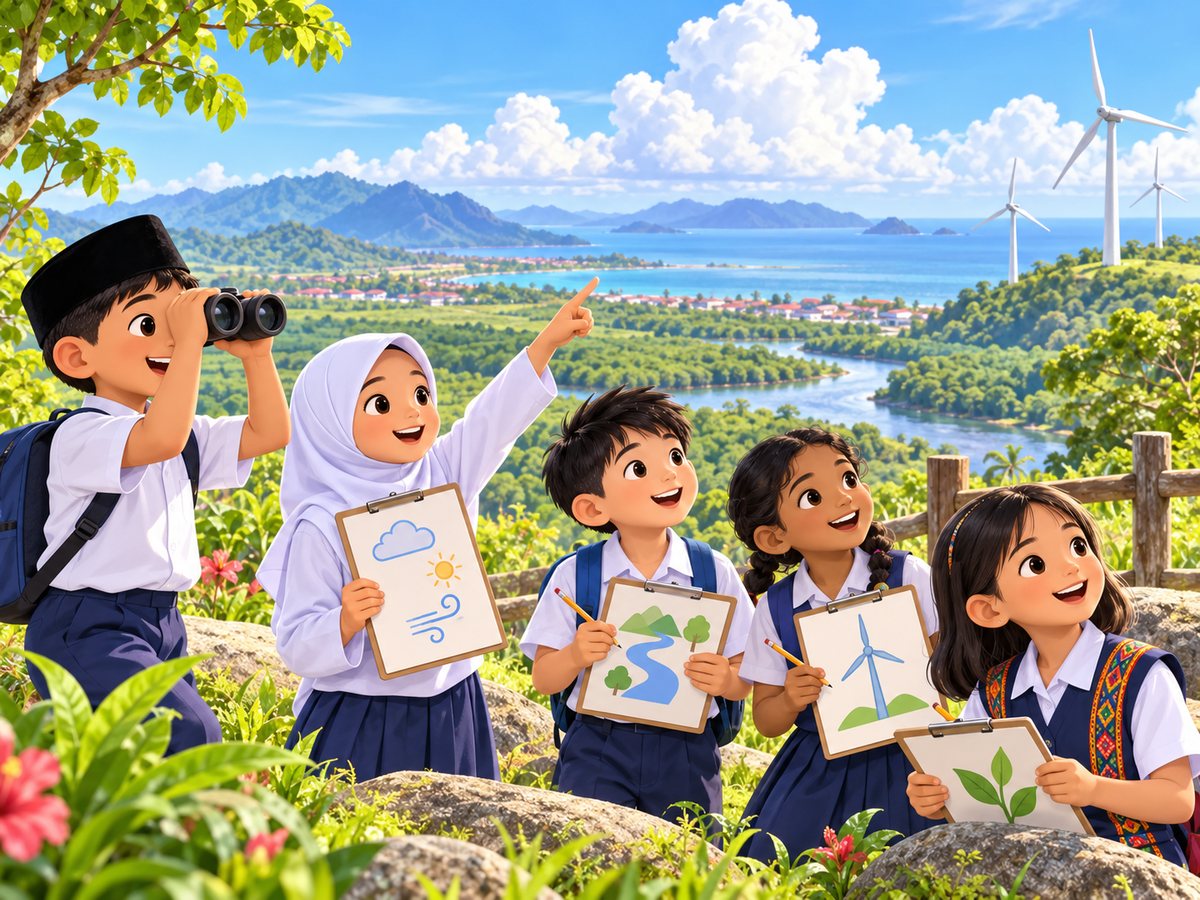
Hujan, sungai, tasik, laut dan mata air ialah sumber semula jadi. Air mengalir dari tempat tinggi ke tempat rendah.
Langkah 1
Air bergerak melalui bumi
Hujan, sungai, tasik, laut dan mata air ialah sumber semula jadi. Air mengalir dari tempat tinggi ke tempat rendah.
sumber air + tinggi → rendah
Air bergerak melalui bumi = 水在大地上移动 雨、河、湖、海和泉水都是天然水源。水总是从高的地方流到低的地方。这一页把水源和水流合在一起复习。例子:山上的泉水流成小溪,再流进山谷里的河。注意:泉水和雨水来的方向不同,一个从地下,一个从天上。
Air bergerak melalui bumi = water moves across the land Rain, rivers, lakes, seas and springs are natural water sources. Water always flows from high places to low places. This page reviews water sources and water flow together. Example: A mountain spring becomes a stream, which runs into a river in the valley. Watch out: Springs and rain come from different directions; one rises from underground, the other falls from the sky.
Langkah 2
Kitaran air berulang
Air menyejat, wap menyejuk membentuk awan, hujan turun dan air mengalir semula ke sungai atau laut.
air → wap → awan → hujan → air
Kitaran air berulang = 水循环一直重复 水蒸发变成水蒸气,水蒸气变冷形成云,云降下雨,雨水再流回河和海。然后又重新开始。例子:早上晒在阳台的湿抹布干了,水汽升上天,以后可能变成另一场雨。注意:顺序是水、水蒸气、云、雨,不能跳过或颠倒。
Kitaran air berulang = the water cycle repeats Water evaporates into vapour, the vapour cools into clouds, clouds give rain, and rainwater flows back to rivers and seas. Then it all starts again. Example: A wet cloth on the balcony dries in the morning, and that vapour may one day fall as another shower. Watch out: The order is water, vapour, cloud, rain; do not skip or swap any stage.
Langkah 3
Udara menyokong hidupan dan bergerak sebagai angin
Udara mengandungi gas seperti oksigen dan karbon dioksida. Benda hidup memerlukan udara untuk bernafas. Apabila udara bergerak, angin boleh membantu atau menjadi berbahaya jika terlalu kuat.
udara: bernafas | udara bergerak: angin
Udara menyokong hidupan = 空气支持生命 生物要靠空气呼吸。空气流动就是风。风可以帮忙,例如吹干衣服,但太强就会带来危险。例子:微风让风车转动,暴风却可能吹倒招牌。注意:同样是风,要看强弱才知道是帮忙还是危险。
Udara menyokong hidupan = air supports life Living things need air to breathe, and moving air is wind. Wind can help, such as drying clothes, but it becomes dangerous when it is too strong. Example: A breeze turns a windmill, while a storm may knock down a signboard. Watch out: The same wind can help or harm, so check how strong it is.
Semak cepat · Soalan 1 / 2
Cuba sendiri
Pilih jawapan. Jika belum tepat, baca petunjuk dan cuba lagi.
Air mengalir dari...
Air mengalir dari = 水从哪里流 题目问水是从哪里流到哪里。回想第1步的复习:水流和地心引力有关。看选项时,“dari”是起点,“ke”是终点。没有力量帮忙,水能不能从海边流上山?例子:水倒在倾斜的砧板上,顺着斜面滑进水槽。注意:有两个选项很像但方向相反,起点和终点都要看清楚。
Air mengalir dari = water flows from The question asks where water flows from and to. Recall the review in Step 1: water flow is linked to gravity. When reading the choices, 'dari' marks the start and 'ke' marks the end. Without any help, could water travel from the sea up a mountain? Example: Water poured onto a tilted chopping board slides down into the sink. Watch out: Two choices look alike but point opposite ways, so read both the start and the end.
Semak cepat · Soalan 2 / 2
Cuba sendiri
Pilih jawapan. Jika belum tepat, baca petunjuk dan cuba lagi.
Peringkat selepas wap menyejuk ialah...
Selepas wap menyejuk = 水蒸气变冷之后 题目问水蒸气变冷以后,下一个阶段是什么。回想第2步的顺序:水、水蒸气、然后是什么,再下雨。干电池和磁铁跟水循环有没有关系,可以用来检查。例子:洗热水澡后,浴室天花板会挂满小水珠。注意:要找的是紧接着的阶段,不是最后的阶段。
Selepas wap menyejuk = after the vapour cools The question asks which stage comes right after water vapour cools. Recall the order in Step 2: water, vapour, then something, then rain. Check whether a dry cell or a magnet has anything to do with the water cycle. Example: After a hot shower, tiny drops gather on the bathroom ceiling. Watch out: Look for the stage that comes immediately next, not the final stage.
Ringkasan
Syabas!
Kamu telah mengulang kaji bab Bumi.
Ingat: air bergerak melalui bumi; kitaran air berulang; udara menyokong hidupan dan bergerak sebagai angin.