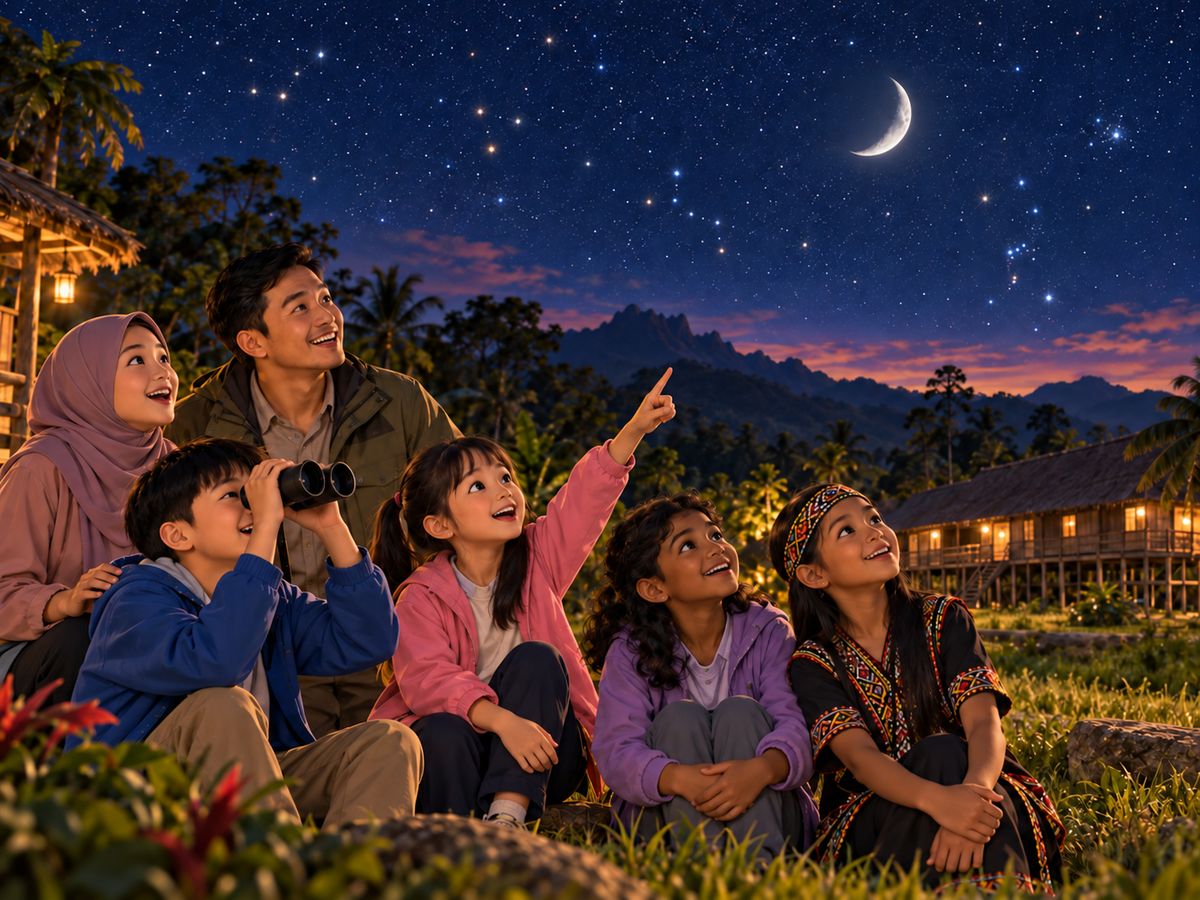
Dalam keadaan terang, bentuk, warna dan kedudukan objek lebih mudah dikenal pasti. Kita boleh membaca, menulis dan bergerak dengan lebih selamat.
Langkah 1
Terang apabila cahaya cukup
Dalam keadaan terang, bentuk, warna dan kedudukan objek lebih mudah dikenal pasti. Kita boleh membaca, menulis dan bergerak dengan lebih selamat.
cahaya mencukupi → pandangan jelas → aktiviti lebih mudah
keadaan terang = 明亮的环境 光足够时,物体的形状、颜色和位置都容易看清楚。所以在亮处读书、写字和走动都比较方便、安全。 例子:白天在操场上,很容易分辨同学穿的是红衣还是蓝衣。 注意:亮不代表东西变大或变轻,光只是让我们看得更清楚。
keadaan terang = bright conditions With enough light, the shape, colour and position of objects are easy to recognise. That is why reading, writing and moving around are easier and safer in a bright place. Example: On the field during the day, you can easily tell whether a friend wears a red or blue shirt. Watch out: Light does not make things bigger or lighter; it only helps us see them more clearly.
Langkah 2
Gelap apabila cahaya sedikit
Dalam keadaan gelap, objek sukar dilihat dengan jelas. Aktiviti yang memerlukan penglihatan mungkin menjadi lambat, kurang tepat atau tidak selamat.
cahaya sedikit → pandangan kurang jelas → aktiviti lebih sukar
keadaan gelap = 黑暗的环境 没有光或光太少时,物体很难看清楚。需要用眼睛的活动会变慢、容易出错,甚至不安全。 例子:晚上不开灯找铅笔,要摸很久,还可能撞到桌角。 注意:光线昏暗也算 gelap 的一种,不是完全漆黑才会看不清。
keadaan gelap = dark conditions With no light or too little light, objects are hard to see clearly. Tasks that need our eyes become slow, less accurate or even unsafe. Example: Looking for a pencil at night without a lamp takes a long time, and you may bump into the table. Watch out: Dim light counts too; it does not have to be pitch black before seeing becomes hard.
Langkah 3
Tambah cahaya dengan selamat
Jika kawasan terlalu gelap, nyalakan lampu atau gunakan lampu suluh. Jangan berlari atau mengendalikan benda tajam sebelum kawasan diterangi dengan baik.
kawasan gelap + lampu → kawasan terang dan lebih selamat
tambah sumber cahaya dengan selamat = 安全地加光 地方太暗时,先开灯或用手电筒照亮。照亮之前,不要奔跑,也不要拿剪刀、刀子这类尖利的东西。 例子:半夜起床上厕所,先按开走廊的灯再走。 注意:顺序很重要:先照亮,再行动,不能一边跑一边找开关。
tambah sumber cahaya dengan selamat = add light safely When an area is too dark, switch on a lamp or use a torch first. Before the place is lit, do not run or handle sharp things such as scissors or knives. Example: When you wake up at night to use the toilet, switch on the corridor light before walking. Watch out: Order matters: make it bright first, then move, rather than running while searching for the switch.
Semak cepat · Soalan 1 / 2
Cuba sendiri
Pilih jawapan. Jika belum tepat, baca petunjuk dan cuba lagi.
Mengapakah membaca lebih mudah di tempat terang?
membaca di tempat terang = 在亮处读书 题目问“为什么”在亮处读书比较容易。想一想光对眼睛有什么帮助,再检查每个选项说的事在现实中会不会发生。 例子:同一张字条,在昏暗的车里看不清,下车到阳光下就读得出来。 注意:答“为什么”的题,要找能解释原因的句子,不是只描述情况。
membaca di tempat terang = reading in a bright place The question asks why reading is easier where it is bright. Think about how light helps our eyes, then check whether each choice could really happen. Example: A note that is hard to read inside a dim car becomes easy to read in sunlight outside. Watch out: A why question needs a choice that gives a reason, not one that simply describes something.
Semak cepat · Soalan 2 / 2
Cuba sendiri
Pilih jawapan. Jika belum tepat, baca petunjuk dan cuba lagi.
Apakah yang patut dilakukan sebelum berjalan di bilik yang gelap?
bilik yang gelap = 黑暗的房间 题目问走进黑暗房间“之前”应该做什么。想一想哪种做法能让你看清楚路,又能避免跌倒或撞伤。 例子:晚上骑脚踏车,车头要装灯,自己和别人才看得见。 注意:每个选项都要想后果:这样做会更安全,还是更危险?
bilik yang gelap = a dark room The question asks what to do before walking into a dark room. Think about which action helps you see the path and keeps you from tripping or bumping into things. Example: A bicycle ridden at night needs a front light so the rider and others can see. Watch out: Imagine the result of each choice and ask whether it makes you safer or puts you in danger.
Ringkasan
Syabas!
Kamu telah belajar tentang Terang dan Gelap.
Ingat: terang apabila cahaya cukup; gelap apabila cahaya sedikit; tambah cahaya dengan selamat.