Habitats
A habitat is a natural home that provides living things with the conditions they need.
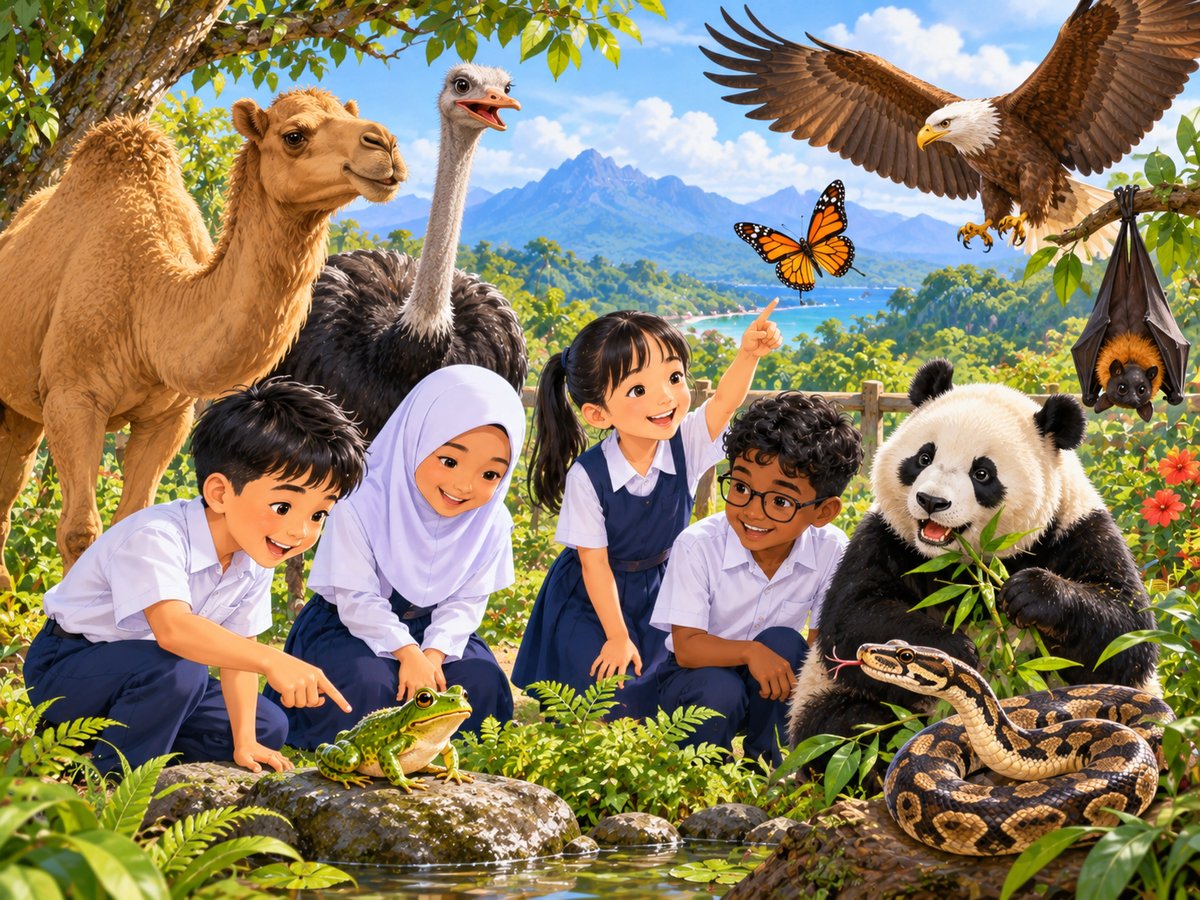
Five different habitats
A polar region is cold and snowy, an ocean has salt water, a jungle has many trees, a desert is dry and sandy, and mountains are high and rocky.
Example: What colour is the ocean? It’s blue. What colour is the jungle? It’s green.
根据气候和自然特征辨认五种栖息地。例子:sand 指向 desert,coral 指向 ocean。注意:颜色只能辅助判断,关键是自然条件。
Di sini kamu belajar mengenal lima habitat melalui iklim dan ciri semula jadinya. Habitat ialah tempat tinggal haiwan yang memberi makanan, air dan perlindungan. Contoh: sand menunjukkan desert manakala coral menunjukkan ocean. Awas: warna membantu tetapi keadaan semula jadi ialah petunjuk utama.
Match a feature to a habitat
Natural features give strong clues: snow belongs in cold regions, coral grows in the sea, and dense trees form a jungle.
Example: Rocks are common in mountains. Sand covers much of a desert.
这里要理解用 snow、coral、trees、sand 和 rocks 配对环境。例子:coral 在 ocean,dense trees 在 jungle。注意:同一特征可能多处出现,要选择最常见、最明显的那个配对。
Fikirkan cara untuk memadankan snow, coral, trees, sand dan rocks dengan habitat. Contoh: coral terdapat di ocean dan pokok tebal di jungle. Awas: satu ciri boleh wujud di tempat lain tetapi pilih hubungan yang paling tipikal.
Where do you usually find coral?
要根据珊瑚生长环境选择 ocean。例子:珊瑚礁位于海洋水域。注意:mountains 的 rocks 不是 coral。
Skrin ini membantu kamu menggunakan persekitaran air laut untuk memilih ocean. Karang hanya hidup dalam air laut, jadi habitatnya mesti mempunyai air masin. Contoh: terumbu karang tumbuh di kawasan laut. Awas: rocks di mountains bukan coral.
Animals need suitable homes
Match an animal to the food, temperature and space it needs. Tigers and parrots live in jungles, camels in deserts, goats in mountains and penguins in polar regions.
Example: A shark and a jellyfish live in the ocean because they need water.
要根据动物需要的温度、水和空间选择环境。例子:camel 适应干燥 desert,shark 需要 ocean。注意:不能只按动物颜色配对栖息地。
Skrin ini membantu kamu memilih habitat berdasarkan suhu, air dan ruang yang diperlukan haiwan. Contoh: camel sesuai di desert dan shark memerlukan ocean. Awas: jangan memadankan habitat berdasarkan warna haiwan sahaja.
Which habitat is most suitable for a camel?
这一屏练习根据骆驼适应干燥炎热环境选择 desert。例子:camel 能在沙漠环境中生活。注意:ocean 和 polar region 的条件不同。
Fokus ini menerangkan menggunakan penyesuaian unta terhadap keadaan kering dan berpasir. Unta boleh hidup lama tanpa minum air dan kakinya lebar untuk berjalan di atas pasir. Contoh: unta dapat hidup dalam keadaan desert. Awas: ocean dan polar region mempunyai keadaan yang sangat berbeza.
Build a habitat model
Choose one habitat. Add three natural features and one suitable animal, then label each part with your own words.
Example: Ocean model: water, rocks, coral and a shark.
这一屏练习用三个自然特征和一种动物表现环境。例子:ocean 模型可有 water、coral、rocks 和 shark。注意:发挥创意,用自己的布局和标签。
Fokus ini menerangkan mewakili satu habitat dengan tiga ciri dan seekor haiwan yang sesuai. Contoh: model ocean boleh mengandungi water, coral, rocks dan shark. Awas: gunakan kreativiti kamu dan buat susun atur serta label sendiri.
A habitat meets living needs
Identify the natural features first, then decide which animal can find suitable food, temperature, water and space there.
Example: Snow and ice suggest a polar region; a polar bear can live there.
用食物、温度、水和空间解释动物与环境配对。例子:polar bear 适应冰雪和寒冷环境。注意:说出配对时要提供环境理由,不只写名称。
Di sini kamu belajar menerangkan padanan haiwan dan habitat melalui makanan, suhu, air dan ruang. Contoh: polar bear sesuai dengan keadaan ais dan sejuk. Awas: beri sebab berdasarkan keadaan dan bukan nama habitat sahaja.
Great work!
You have completed Habitats.
Start 8-question practice →